Does Polis reduce polarisation?
By Andy Paice
6 months ago
At CrownShy, we've been delighted to support Florian with his master's thesis research on a topic that feels increasingly urgent as polarisation deepens in societies across the globe. PolisFlow is part of the interoperable, open-source technology we've been developing. (You can read more about how it works in this previous blog post.) It enabled him to surround a Polis conversation with research scaffolding: a pre-survey, the Polis deliberation itself, and a post-survey to measure what shifted. This guest post gives us an early preview of his findings.
The modular approach called "PolisFlow", provided by CrownShy, enables conducting research on Polis
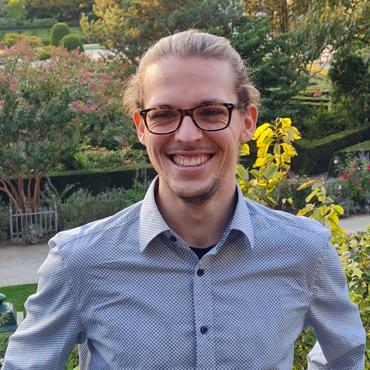
My name is Florian Wagner, my nickname is flow, and for my master's thesis, I did research on Polis.
Funny coincidence: Crown-Shy supported me with a software solution called "PolisFlow"!
What Polis does:
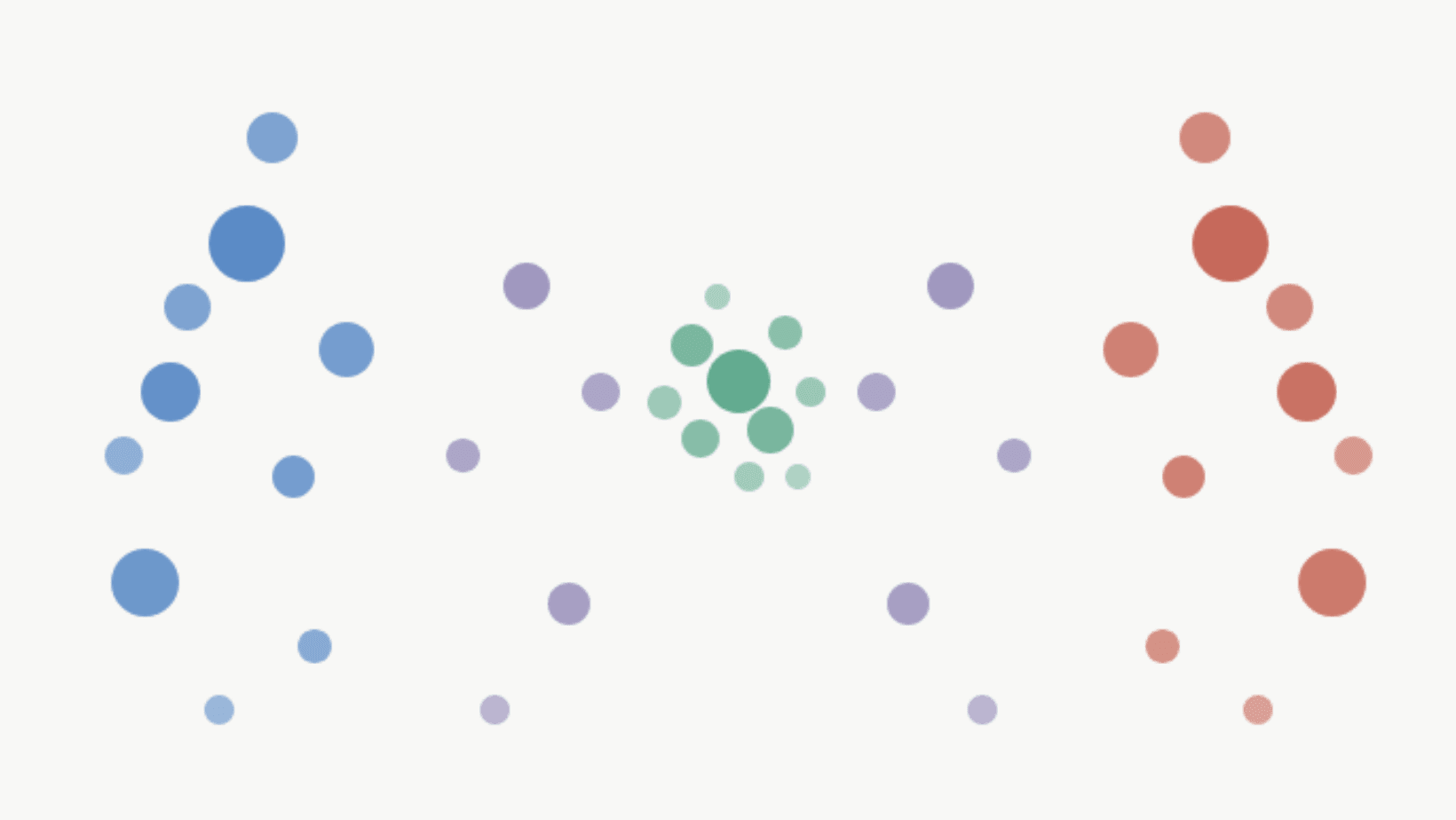
Polis is an online deliberation tool, where people can vote on statements and add their own. It allows voting and introducing new statements into the Polis conversation, not as a way to aggregate and fix a final collective decision, but rather to make visible the uncommon ground and bridging ideas (Rausch, 2026). It exposes the things that people across different opinion groups can actually agree on.
What PolisFlow does:
PolisFlow is a process developed by CrownShy which gives the opportunity to add elements before and after the Polis conversation, like an educational section or surveys. On its own, Polis has no way to capture what participants thought before or after the conversation. PolisFlow bridges that gap. This created an environment which allowed conducting research on Polis for the study.
Here is how it went:
The goal for the master's thesis was to find out if participating in a Polis conversation (without a deliberation process or citizens' participation) can lead to a depolarization in the group of participants. More than 300 people were contacted; 180 started the process. 119 participants finished the process, and 105 participants' datasets were eligible for the final evaluation.
Process of study
The process for the participants was the following:

- Collecting people's email addresses for high representation.
- Informing people on the process through a "How-to" video and provision of material about the topic, which is going to be discussed in the Polis conversation.
- Forwarding participants to the pre-survey to understand their position on the topic before the Polis conversation.
- Participants enter, re-enter, read, vote, and write statements in the Polis conversation for approx. 12 days.
- Participants receive an extended report of the Polis conversation with additional visualizations and analysis.
- Ask people to do the post-survey to understand their positions on the topic after the process and measure the change of opinion and affection polarization.
Results of Study
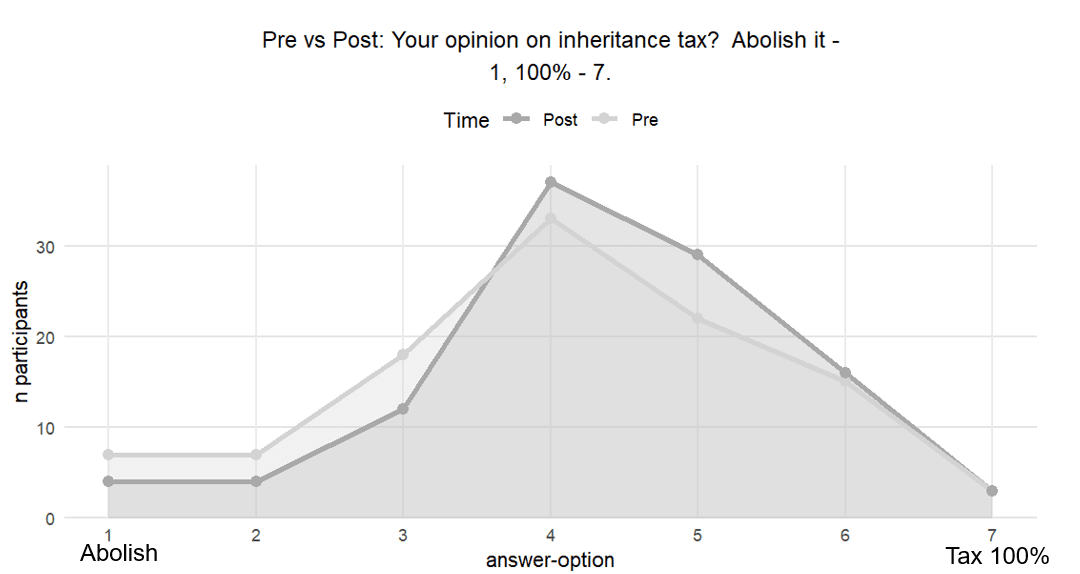
The topic of the Polis conversation was "inheritance tax." For the six survey propositions asking for participants' opinion, I measured an average opinion change of 10%. For the two survey propositions asking for participants' affection, I measured an average affection change of 12%. Across all eight survey propositions, the direction of that change was consistent: every single one showed depolarization.
For two of the total eight survey propositions, one of opinion change and one of affection change, I measured a significant level of depolarization, meaning the result is unlikely to be down to chance. This allows me to state that Polis, on its own, can depolarize its participants.
Conclusion
Of course, a master's thesis has several limitations, like a small sample size or a non- representative participants' distribution, but it qualifies as a promising indicator for more and more professional research on this topic.
As soon as the paper is published, all results can be reviewed.
A first cliffhanger preview can be seen here: